
Mother is a Question
This podcast is an invitation into the depths of mothers’ hearts, minds and stories. Join best friends Julia Metzger-Traber and Tasha Haverty as they crack open definitions of motherhood and listen for the unspeakable through playful, intimate conversations with mothers from all walks of life. Mother is a Question is a portal into the kaleidoscopically different and yet universal experiences of what it means to mother. Not another chat show sharing practical advice from the daily frontlines of mothering, but a space to live in the questions, and enlist the existential and poetic wisdom of those who mother. What would the world be if we took mothers’ questions and their wisdom seriously? Story editing by Rob Rosenthal; produced in partnership with PRX and the John Templeton Foundation.
Despite Bans, Pregnant Prisoners Still Shackled During Birth
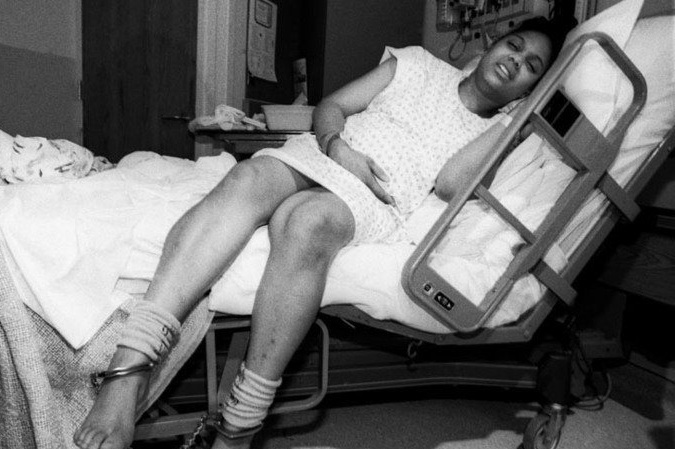
Across the country, it's common practice to handcuff a pregnant prisoner to her hospital bed while she gives birth.

Photo by Jane Evelyn Atwood
Across the country, it's common practice to handcuff a pregnant prisoner to her hospital bed while she gives birth. Maria Caraballo gave birth to her daughter an entire year after New York passed its anti-shackling law. But she says she was handcuffed for eight hours the day her daughter Estrella was born.
When Should Infants Stay with Their Mothers in Prison?
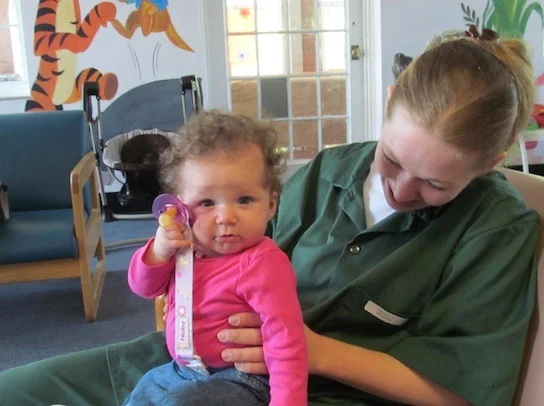
The number of women in American prisons has gone up by 800 percent over the past thirty years, according to the Federal Bureau of Justice. Most of these women are mothers, and about one in twenty of them are pregnant. In New York State, a woman who gives birth while serving time has the chance to stay with her baby in a prison nursery for up to one year, or eighteen months if the mother is eligible for parole by then.

In New York State, a woman who gives birth while serving time has the chance to stay with her baby in a prison nursery, for up to one year, or eighteen months if the mother is eligible for parole by then. A Department of Corrections study found that participating in prison nurseries lowers recidivism rates dramatically—cutting the chances of a woman coming back to prison in half. Researchers say these programs also help the babies, giving them a chance to form secure attachments to their moms. But in recent years, the state’s prison nursery is slowing its admission rate.